
|
|
Signature and Captions in Photography
Marco Antonio Perna - Brasil
I began doing photojournalistic coverage of dance events nearly 20 years ago (1997). It was a time when the internet as we know it today was just taking its first steps. The photos I took were meant to boost the advertisements on my portal dancadesalao.com. Back then, websites were still very important, and I managed to get around 1,000 visits per day. At a time when few people actually accessed the internet, that number was very good for an independent site.
The photographs were posted at a much smaller size, both in quality and in pixel dimensions (320×240, for example). Pages had to be very lightweight so that the average user, accessing the web through the “powerful” dial-up internet of about a quarter of a megabit, could comfortably view the published images. In 1999 I bought a one-megapixel Kodak digital camera, which was more than enough for the job. My Nikon FE with a 50mm f/1.4 lens gradually became reserved only for more elaborate situations.
But even before moving into the digital era, whenever I posted something on the website I was already concerned with including information about the photograph. Of course, the images were posted on specific pages on my site created for each event, with its description and the names of the people I was able to identify. Nowadays I post them in albums on social networks, which also allow the album description to be added and offer the excellent feature of tagging people. However, since those early days internet users were already copying the photos for themselves, and much later, with the first social networks such as Orkut, they would upload them to their own albums—albums that were not dedicated only to their photos from the original event. The result is that years later they often had difficulty remembering what the photos were about, and anyone who saw those images had an even harder time figuring it out.

Already anticipating this loss of information, I soon remembered conferences in other fields that I attended in the 1990s, where the photographer—still in the film era—would place the name of the event on the developed photos that were sold during the event. I also recalled those photographers at restaurants or tourist spots who would include identifying information on the pictures. I remembered the date and time stamped directly onto the negatives at the moment of the shot on analog cameras, and how much I liked that feature (although the date was often wrong because I forgot to set the clock). Before this feature existed, many photo labs would add the date to the border of the printed photo after development, usually showing the month and year when the service was done, which did not necessarily correspond to the actual date the photograph was taken.

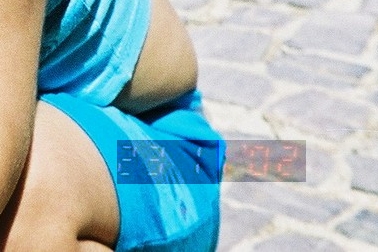
In the photo above, the date-and-time feature of a film camera can be seen (negative film, date in the lower-right corner—although faint, with some effort you can read 11/23/2002).
.jpg)
In the digital photo above, the same date feature appears, stamped directly onto the image in the same way it would be on a negative.
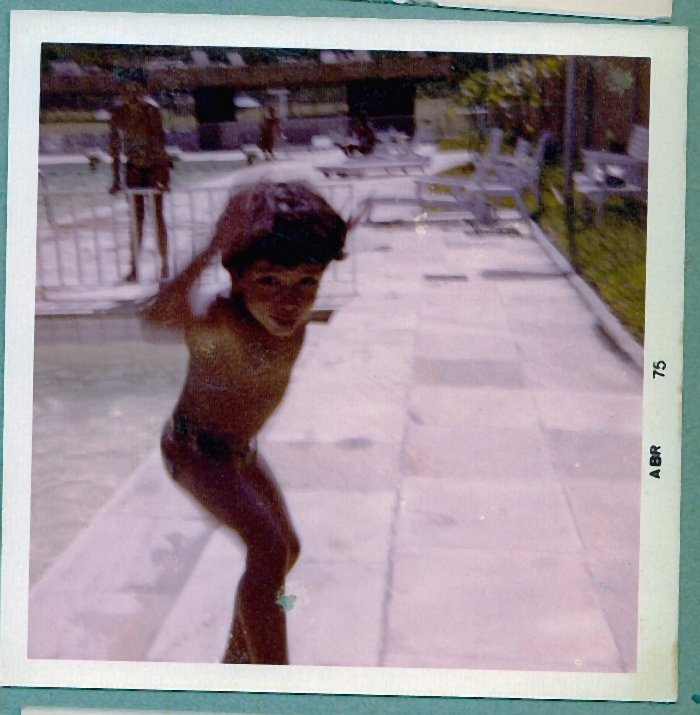
The photo above has the date added on the border by the lab that developed and printed it. Photo by the author, without a signature.
I had no doubt: my work was documentary photojournalistic coverage of dance, so those pieces of information had to be written on the photograph itself. Since then, I have almost never stopped including them.

Years passed, and photography spread widely thanks to the digital era and the internet. Many people began to say that writing on a photograph was ugly, that it was something amateurs did. My response was that amateurs, in fact, usually don’t include such information, and that those photographers at conferences or restaurants were professionals. But then some would try to dismiss the work of our colleagues, so…
When I started, the study of photography was done with film cameras—SLRs—and with technical books, along with very rare photography magazines. It was almost mandatory to buy at least one imported magazine, even though they were extremely expensive. Finding photographic references was therefore not easy as it is today, and there was nothing like the vast world of possibilities that the internet now offers.
In 1998 I began researching the history of Brazilian ballroom dance, and in 2001 I published a book on the subject (referenced in this library: [https://lccn.loc.gov/2004342326](https://lccn.loc.gov/2004342326)). During the research period, I relied on the methods available at the time, which meant searching for books in secondhand bookstores and publications at the National Library in Rio de Janeiro—everything done without the resources that the internet provides today.
It was during that time that I discovered the photographers Augusto Malta and Marc Ferrez. I will not even begin to comment on the number of painters, engravers, sculptors, and other artists whose work I was able to discover or study more deeply during that period. But what matters for us in this article are the photographers, and unfortunately, although I searched their work for references related to my research, I did not find anything directly connected to it. Of course, this does not mean that nothing exists; however, at that time, searching “analogically,” I did not find anything.
What I did find—besides the work of these great photographers, which I remember very well and admire—were social photographs made by Augusto Malta in which he wrote, in his own handwriting, what the event was about directly on the front of the photograph. Looking at a photograph almost one hundred years old, lost among his body of work, it would be impossible to know what it depicted if he had not done that. So I believe I am in good company when I include the information from my website, along with the date, location, and the name of the event, on every documentary or journalistic photograph.
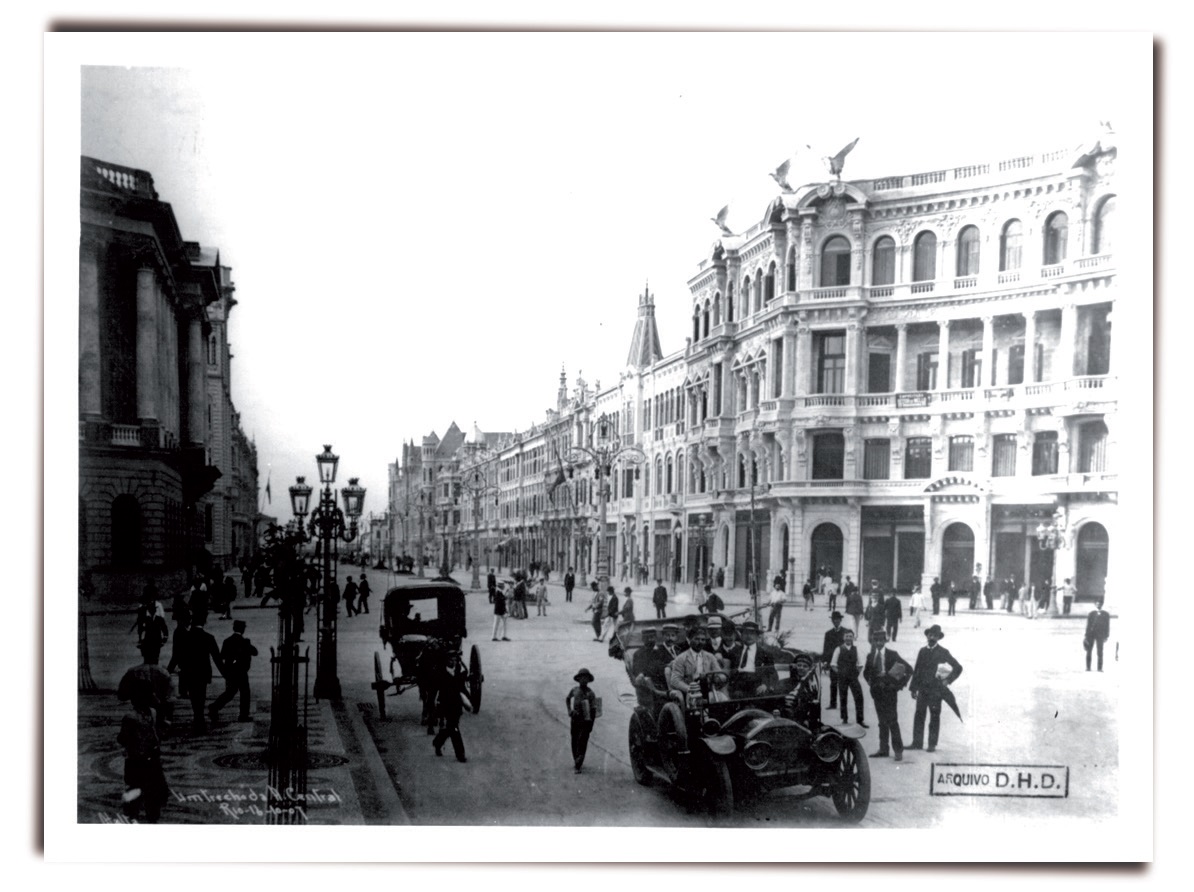
A section of Central Avenue (Rio de Janeiro), dated 1907 and signed by Augusto Malta.
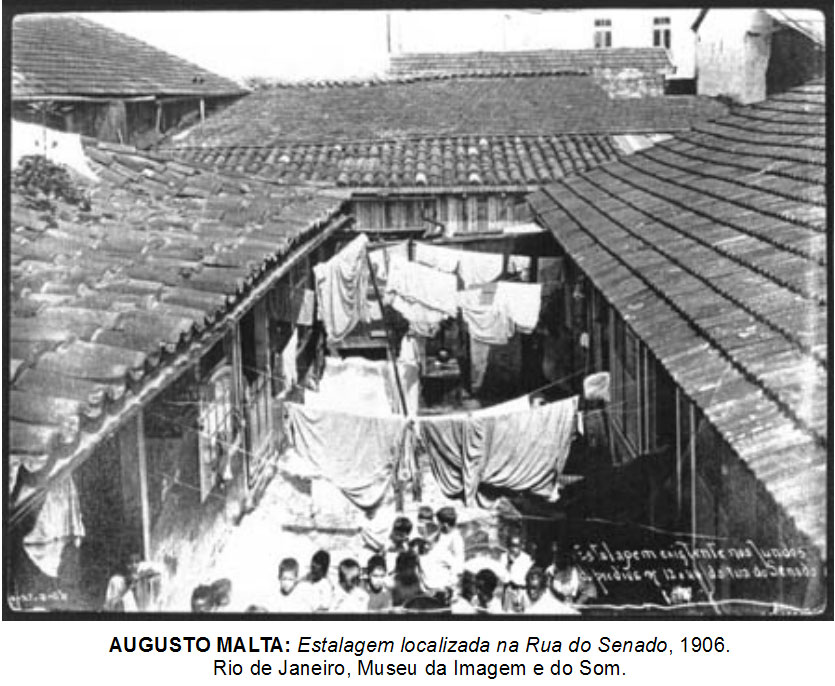
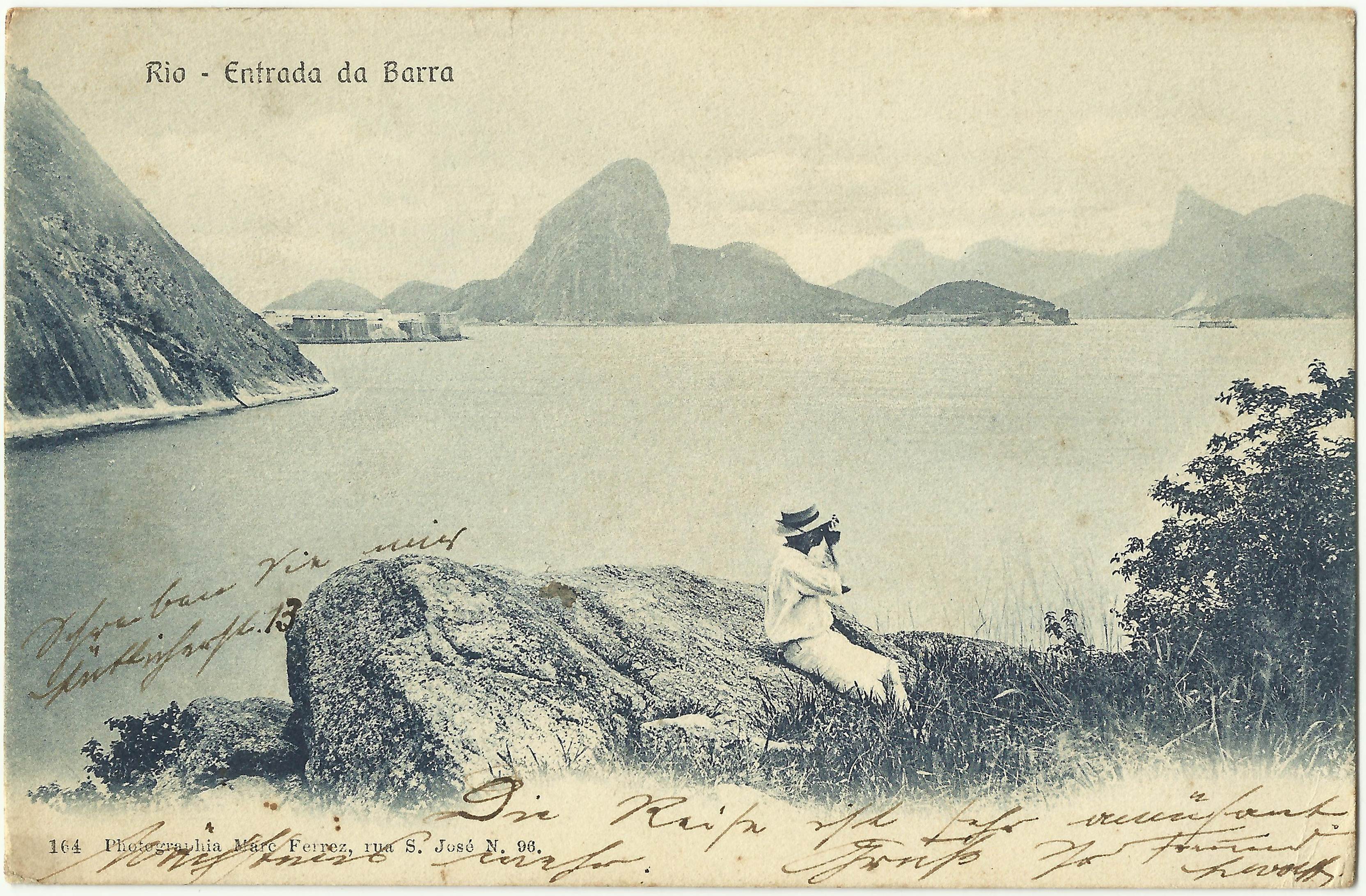
Photograph on a postcard by Marc Ferrez.
Others might say they have never seen this done in photographs published in magazines or printed newspapers, and that even the photographer’s name would appear beside the photo rather than inside it. Well, a newspaper is paper: all the description appears around the photograph, and anyone who wants to keep the information simply keeps the entire article. In other words, it is not necessary to place the information directly on the photograph because all the details are already part of the story. Anyone who does not want the information simply cuts it out—just as many people do with my photos on the internet—and the information is then lost in exactly the same way. There is not much that can be done about that, even though removing the name or altering the crop of a photograph violates copyright.
And the signature? Malta—and, I believe, many photographers of his time and earlier—placed their names on their photographs. The image would travel from hand to hand, from one shoebox to another, much like today it moves from one social media profile to another. The author’s name needed—and still needs—to be preserved.
In printed newspapers the name appeared beside the photo, and it was easy to cut out the picture together with the author’s name. On the internet, the equivalent would be taking a screenshot (capturing the screen image into a file), which would preserve the name if it appeared beside the photograph. But who takes a screenshot when it is much easier simply to save the image? People usually save only the picture itself, and nothing that appeared beside it comes along. That is why the author’s name needs to be on the photograph itself.
Others will say that the information and authorship are preserved in the EXIF data (the metadata embedded in the photo file). Well, can anyone tell me how to find EXIF data in photos copied from many websites on the internet? A large portion of those sites—especially social networks—remove the EXIF information. In those cases, only explicit “metadata” printed directly on the photograph remains (and even that disappears if someone deliberately crops the image). Besides, even if the EXIF data were preserved, the average user would have no idea how to find the author’s name within it.
Of course, I am speaking about a particular type of photography and about publication on the internet. Adding printed information (a caption) directly onto the image only makes sense for certain kinds of photographs. A signature, however, is necessary for almost any photograph published online. In portrait photography people often refer to Rembrandt lighting, and it is worth remembering that painters signed their works, and today no one complains when a modern painter signs theirs as well. Of course, painters in earlier times often produced works under contract, and for that reason many paintings were not signed. They were the portraitists of their time, and no one knew that many of them would later become famous or that their paintings would become so valuable. Photography has also been—and still is—like that: whether or not a photograph carries a signature depends on the type of image and on the nature of the “contract” involved.
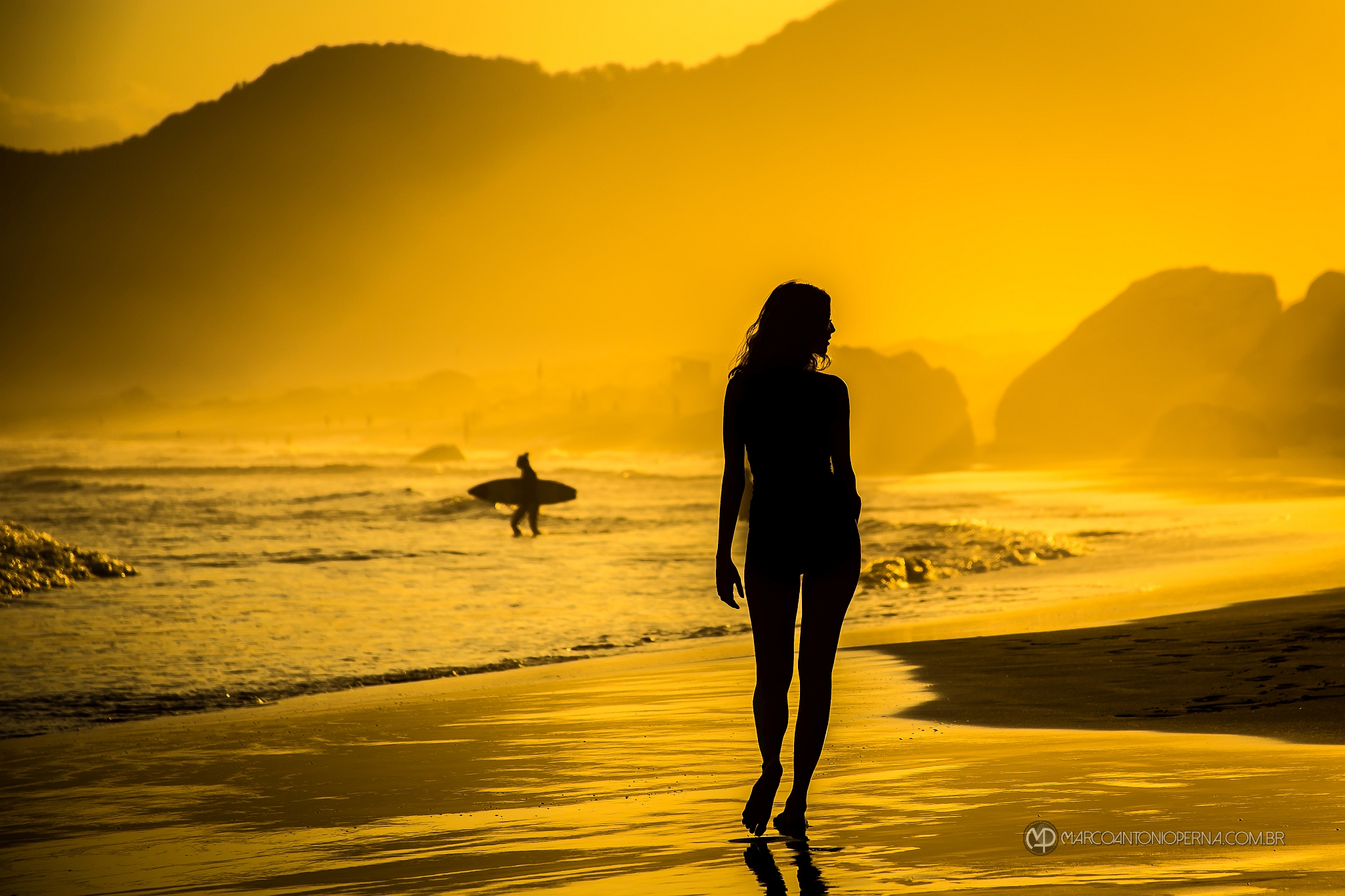
I can therefore say that placing printed captions directly on the photograph is valid and depends exclusively on the type of photo and on the agreement that was made. Taking wedding photography as an example, I would say that if the photos were purely documentary, the inclusion of explicit metadata would be valid, since decades or even centuries later we could know who the bride and groom were, and where and when the wedding took place.
Today, however, wedding photography has also become an art form, and in that case I admit that placing such information directly on the image would look very unattractive—although it remains essential in the EXIF data. That leaves the signature: since modern wedding photography is treated as art, it makes sense to sign the work wherever possible. Normally, in a printed album there is no need to sign every photograph, and it would likely look awkward, but on the internet, in the photographer’s portfolio, it is quite advisable.
Each photographic style and objective calls for a different approach. Share what your style is and why you think information or a signature should—or should not—be included. In the end, it is best to do what you believe works best.
Originally published in Portuguese on January 13, 2016 at the link:
https://www.fotografia-dg.com/assinatura-e-legendas-em-fotografia/
English version: March 10, 2026

EXT Photo Magazine. © 2019-2026 MAP - All rights reserved. Website by MAP
|